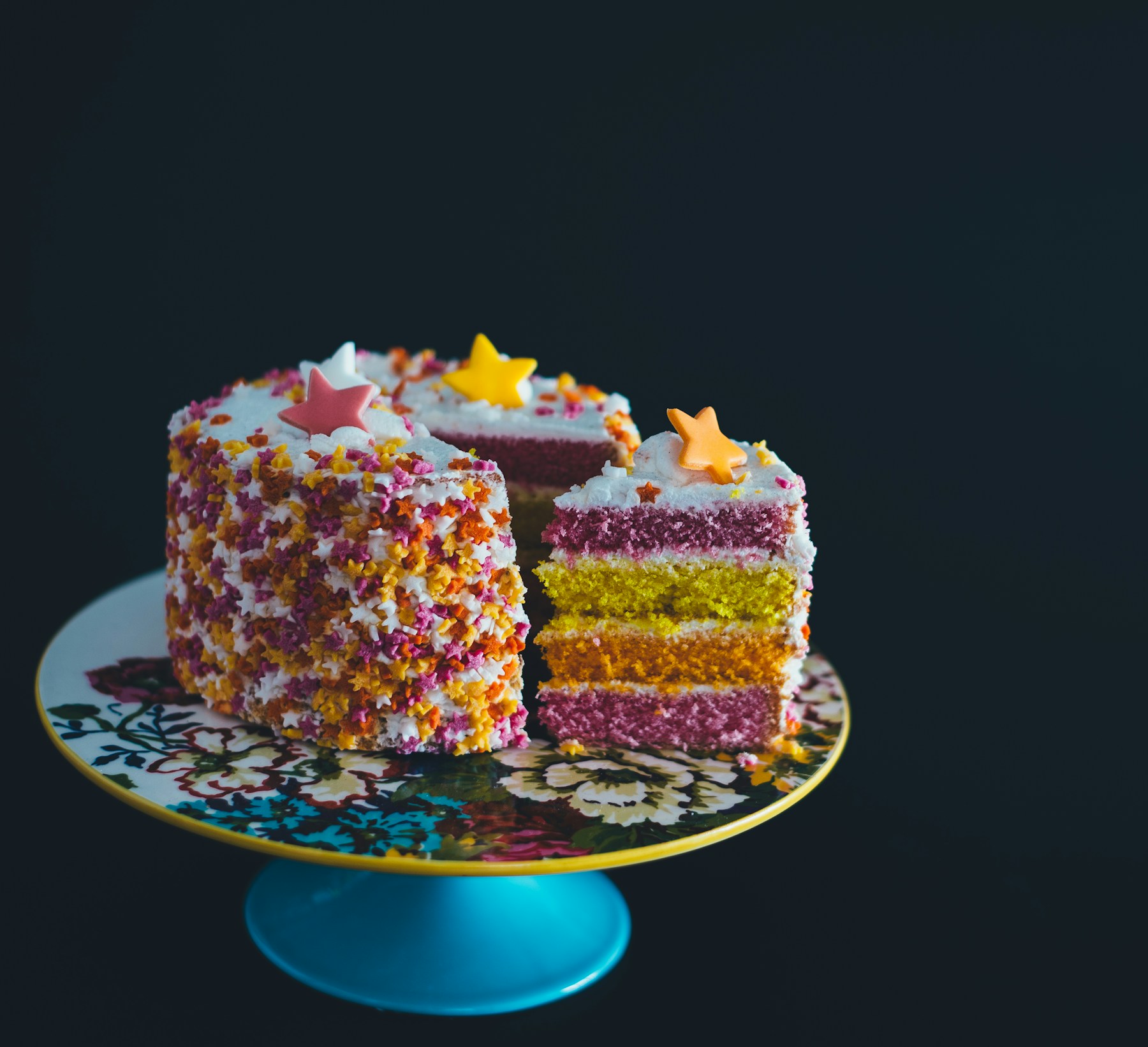
Bake a cake worth celebrating
From the first cup of flour to the last swirl of buttercream, this is a friendly guide to making cakes at home.
A good cake is not magic. It is a few simple ingredients, measured with care, mixed in the right order and baked at the right heat. Get those right and the decorating is the fun part.
Choose your cake

Classic chocolate
Deep, moist and made with cocoa and hot coffee. The one to bake when you want everybody to ask for the recipe.

Summer berry sponge
A light vanilla sponge, whipped cream and whatever berries are in season. Simple, fresh and made for sunny afternoons.

Celebration drip cake
Tall layers, smooth buttercream and a glossy drip on top. It looks like a bakery cake, but every step is one you can learn.
What you will need
Everything for one 20 cm (8 inch) vanilla sponge, two layers. Bring the butter and eggs to room temperature first.
Ingredients
| Ingredient | Amount | Why it matters |
|---|---|---|
| Plain flour | 225 g | Gives the cake its structure |
| Caster sugar | 225 g | Sweetness and a tender crumb |
| Unsalted butter | 225 g | Flavour and moisture |
| Eggs | 4 large | Bind and lift the batter |
| Baking powder | 2 tsp | Makes the sponge rise |
| Milk | 3 tbsp | Loosens the batter |
| Vanilla extract | 2 tsp | The classic flavour |
Equipment
- Two 20 cm round cake tins
- Baking paper
- A large mixing bowl
- An electric or stand mixer
- A kitchen scale
- A rubber spatula
- A wire cooling rack
- A palette knife for the frosting
The method
- Heat the oven to 180 °C (160 °C fan, 350 °F). Grease both tins and line the bases with baking paper.
- Cream the butter and sugar for 3 to 4 minutes, until pale and fluffy. This traps the air that makes the cake light.
- Add the eggs one at a time, beating well after each. If the mix starts to curdle, add a spoonful of the flour.
- Fold in the dry ingredients. Sift the flour and baking powder over the bowl and fold gently until just combined.
- Loosen with milk and vanilla until the batter drops easily off the spoon.
- Divide and bake for 22 to 25 minutes, until golden and a skewer comes out clean.
- Cool completely. Leave the cakes in the tins for 10 minutes, then turn them out onto the rack.
- Fill, stack and frost. Spread jam or buttercream on one layer, add the second and frost the top.
Frosting like a pro
Smooth sides and neat piping come from a few small habits, not from expensive tools.
- Put on a thin crumb coat first, then chill the cake for 20 minutes.
- Keep your palette knife warm and clean between strokes.
- Fill the piping bag only half full, and twist the top as you go.
- Practise a few rosettes on baking paper before you pipe on the cake.
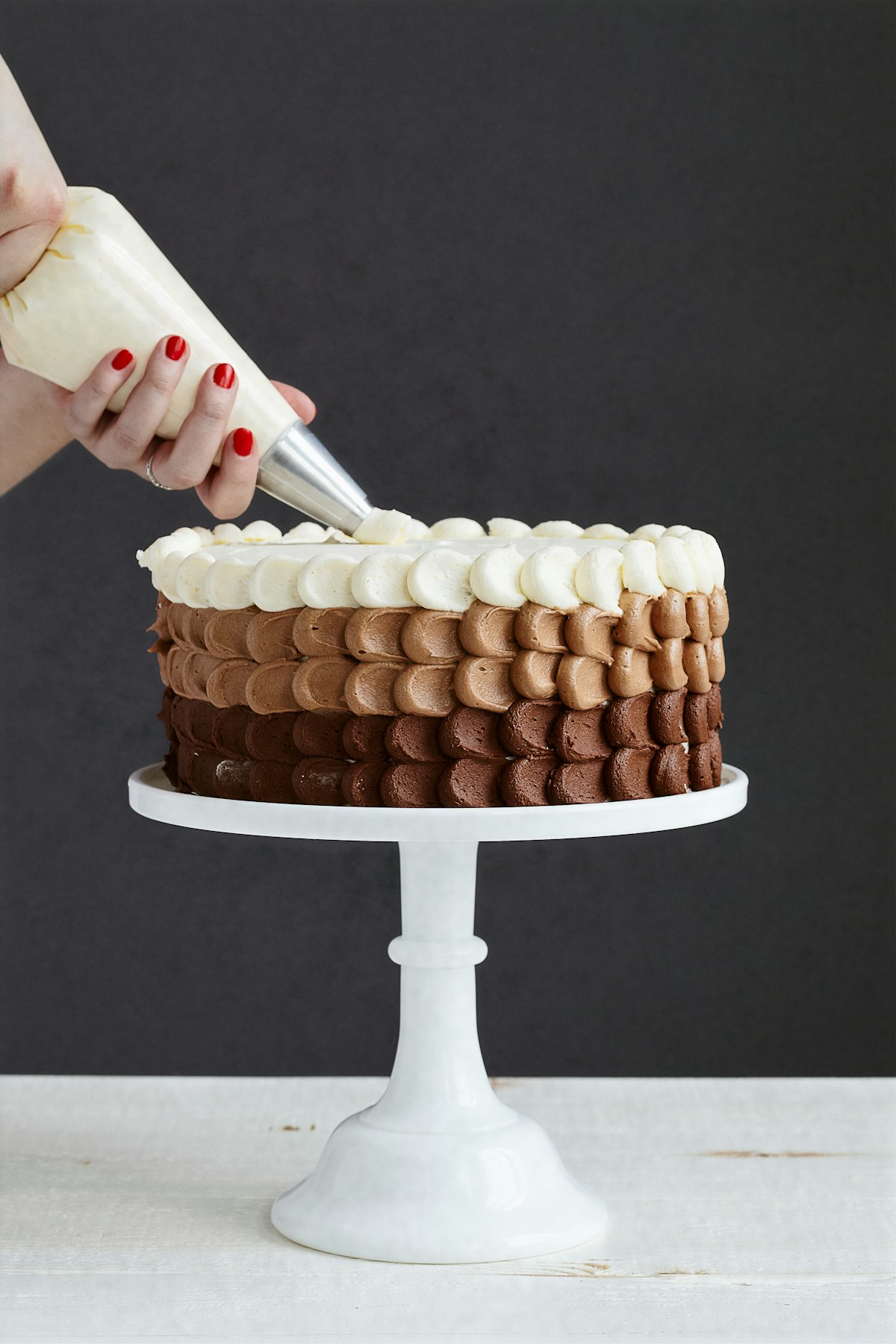
Bake with patience, frost with confidence, and never cut a cake that is still warm.
Every baker who learned the hard way
Cake inspiration
Once you have the basic sponge, every one of these is a variation on it.


Common questions
Why did my cake sink in the middle?
Usually the oven door was opened too early, or the cake came out before it was done. Wait until at least three quarters of the baking time has passed before you check it.
Can I make the sponge a day ahead?
Yes. Wrap the cooled layers tightly in cling film and keep them at room temperature. A day’s rest also makes them easier to level and frost.
How do I stop the cake sticking to the tin?
Grease the tin, line the base with baking paper, and let the cake cool for ten minutes before you turn it out.
What can I use instead of buttercream?
Whipped cream with fresh fruit, a simple chocolate ganache, or a dusting of icing sugar all work well on a vanilla sponge.
Ready, set, bake
Pick a cake, weigh your ingredients and put the oven on. Your first slice is about an hour away.